FOR HVAC BUSINESS OWNERS — THIS IS A LIVE DEMO
Missed calls are missed money.
The assistant on this page is a working demo of the AI employee we build for HVAC companies. It answers your website 24/7, captures the details visitors share, and flags emergencies — so after-hours visitors become booked jobs, not missed money. Flat $297/mo · free setup · month-to-month · 14-day money-back guarantee.
Or scroll down and chat with the demo — try asking it about an after-hours emergency.
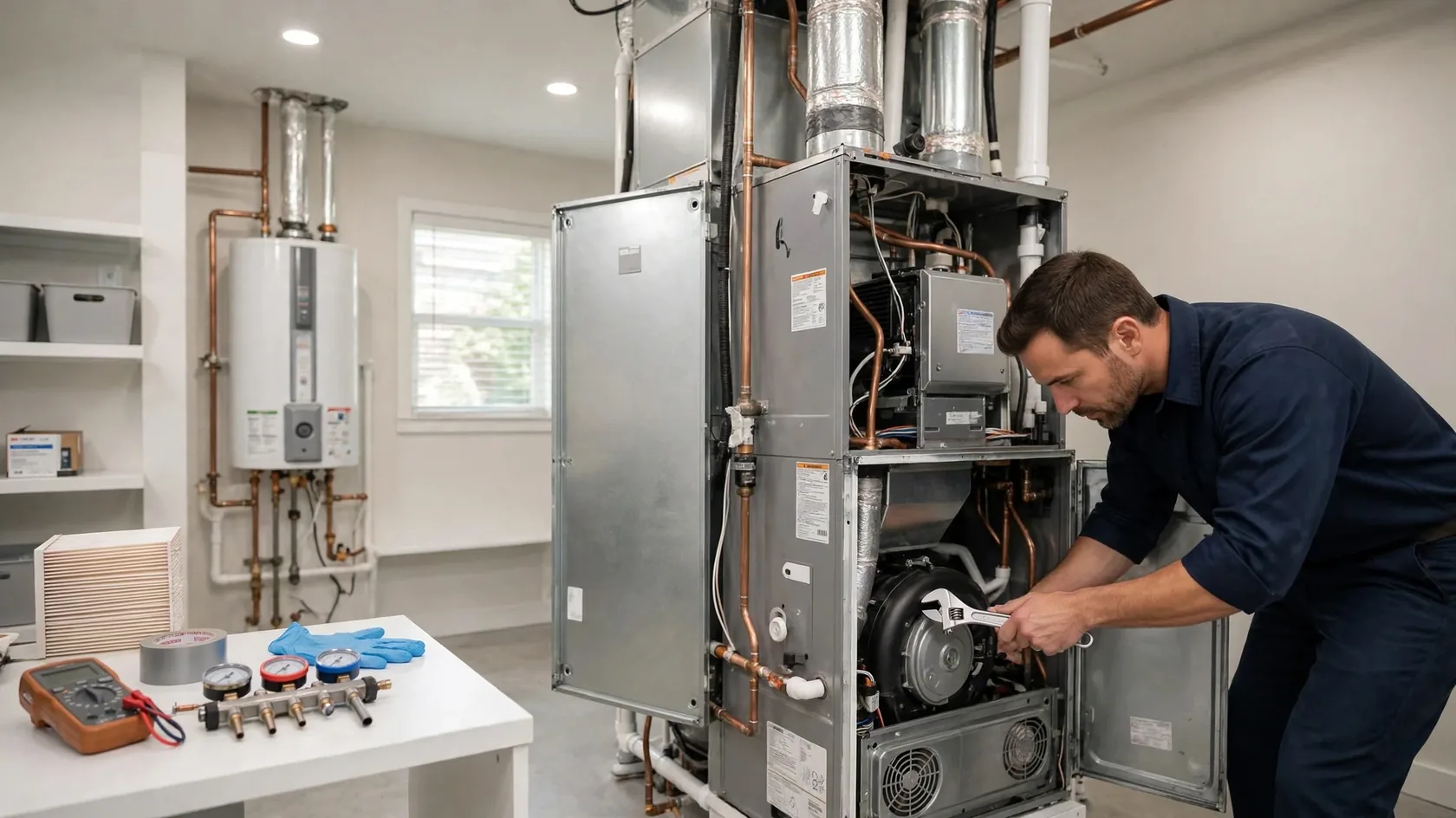
Niagara Falls' 24/7 Heating & Cooling Experts
Family-owned. Around-the-clock emergency service. Free estimates on system replacements.
Our Services
💧 Heating
Furnace repair, installation & maintenance. 24/7 emergency heat when you need it most.
❄ Cooling
AC repair and full system replacements with free estimates.
🌱 Indoor Air Quality
Cleaner, healthier air for your home or business.
🔌 Water Heaters
Water heater services and installs.
⚡ Standby Generators
Never lose power again with a standby generator.
💰 Financing
Flexible financing plus the Paradise Protection Plan maintenance membership.
🚨 Heating Emergency? We're available around the clock.
No heat at 2am? Open the chat — our AI assistant will get help moving in under a minute.
ABOUT THIS LIVE DEMO
AI Answering Service for HVAC Companies — Try the Live Demo Above
No-heat calls don't wait for business hours. Our AI employee for HVAC companies answers every website chat 24/7 — triaging urgent inquiries, taking service-call requests, and following up on estimates while you're on a roof or under a house. Flat $297/month, free setup, no per-call or per-minute fees. Unlike a traditional HVAC answering service that just takes messages, our AI answers from your real services and pricing, qualifies urgency, and sends you ready-to-book inquiries instantly. Scroll up and try the live demo: ask about a furnace dying at 2am.
How emergency triage works on an HVAC website, step by step
- It answers in seconds and asks what matters first. Is the heat out completely, or is the system running and struggling? Is there a gas smell, water around the unit, or a burning odor? Is anyone elderly, very young, or medically vulnerable in the home? If a visitor reports a gas smell, it treats that as an emergency first: it advises them to leave the area and call their gas utility or 911 — it never replaces emergency services.
- It sorts the job by your rules, not by guesswork. No heat in winter, warning smells, and water leaking from the unit are emergencies under most shops’ rules. A noisy air conditioner in October, a tune-up, or a replacement quote is captured as an urgent or routine request instead. You set the thresholds when we build it; it applies them the same way at 2 a.m. and 2 p.m.
- It captures the intake your dispatcher actually needs. Name, mobile number, service address and ZIP — checked against your service area — whether it is no-heat, no-cool, or something else, the system type (furnace, heat pump, boiler, central AC) and its rough age if the homeowner knows it, any warning signs, and what they want next: emergency repair tonight, a next-day visit, or a quote.
- It routes the two kinds of work differently. Emergencies are flagged and sent as an instant alert to the on-call contact you designate, with the full summary attached. Everything else arrives as a clean, ready-to-work lead for the morning — so a maintenance-plan question never wakes your on-call tech at midnight.
- It tells the visitor what happens next. The homeowner hears the next step under your protocol — for example, that the on-call tech has been alerted — instead of a voicemail box or a form promising a reply within one business day. It never promises an arrival time you have not set, and it never asks the homeowner to diagnose their own system.
What it captures for each kind of HVAC job
A no-heat emergency and a spring tune-up should not get the same intake. The assistant is trained on job-specific questions for your shop, so the lead that reaches you already reads like a work order:
No-heat emergencies
Whether heat is fully out, system type, warning signs (gas smell, water, burning odor), and whether anyone vulnerable is in the home — flagged urgent under your rules.
No-cool & AC problems
Cooling out completely or just weak, strange noises or short-cycling, and the system’s type and rough age if the homeowner knows them.
Gas smell & safety warnings
Safety first: the visitor is advised to leave the area and call the gas utility or 911, then contact details are captured so you can follow up once they are safe.
Water heaters
No hot water or leaking, tank or tankless, approximate age and size if known, and whether a replacement quote is wanted alongside the repair.
Generators, air quality & other services
What the homeowner is interested in — standby generator, indoor air quality, duct work — plus home basics and whether they want information or a quote.
Tune-ups, plans & quotes
Maintenance and estimate requests with a preferred timing window and contact details, captured as ready-to-book morning leads — never routed as emergencies.
Questions it answers before a homeowner ever needs to call
Most HVAC website visits are not emergencies — they are a homeowner deciding who to trust. The assistant answers the deciding questions instantly, using only the business information you provide: the towns and areas you serve, whether you offer emergency service, your diagnostic or service-call fees if you choose to publish them, maintenance-plan details, financing if you offer it, warranty and licensing information, and the types of systems you do — and do not — work on. When a visitor asks something outside that information, it does not guess: it captures the question with their contact details so you can answer it yourself. That is the difference between an AI answering service for HVAC companies built around your shop and a generic chatbot dropped on the page — and it is live on this page for you to test.
Can the AI tell a no-heat emergency from a routine tune-up?
Yes. It's trained on your triage rules — no heat in winter, gas smells, and water leaks get flagged as emergencies with your on-call contact alerted immediately, while maintenance requests are captured as booking requests for you to confirm.
How much does an AI answering service for HVAC cost?
Flat $297/month for one website, with free setup and no per-call fees. Compare that to a human answering service at $1+ per call or a full-time receptionist's salary — and ours answers in seconds, 24/7.
Will it work with my existing HVAC website?
Yes. It's one small snippet pasted into your site — WordPress, Wix, Squarespace, or custom. We handle the install free as part of setup.
Is this a phone answering service for HVAC companies?
No — this is a website assistant. It answers visitors on your website 24/7, where your Google and ad traffic already lands. It does not answer your phone line; it makes sure everyone who reaches your site gets helped and captured as a lead — including the no-heat emergency at 2am.
What happens step by step when a homeowner reports no heat in the chat at 2 a.m.?
First it answers in seconds and asks what matters: whether there is a gas smell, water around the unit, or a burning odor, and whether anyone elderly, very young, or vulnerable is in the home — a reported gas smell is treated as an emergency, with the visitor advised to leave and call their gas utility or 911 first. Then it captures the homeowner’s name, mobile number, address, system type and rough age, flags the chat as an emergency under your rules, and sends an instant alert to the on-call contact you designate. The homeowner is told what happens next under your protocol, and the full summary is ready for whoever takes the job.
What information does the assistant collect for a furnace, air conditioner, or water heater problem?
For heating and cooling it asks whether the system is out completely or struggling, the system type (furnace, heat pump, boiler, or central AC) and its rough age if known, and any warning signs like gas smells, water, burning odors, or short-cycling. For a water heater it asks whether the problem is no hot water or a leak, whether the unit is tank or tankless, and its approximate age and size if known. Either way it checks the service address against your area and captures what the visitor wants next — emergency repair, a next-day visit, or a quote — so the lead reads like a work order, not a message slip.
Related live demos & tools: AI answering service for plumbers · AI answering service for electricians · AI answering service for restoration companies · After-hours answering service for contractors · Missed-lead calculator · HVAC lead generation guide · Website Assistant Test
Follow Crafted Workspace AI on Facebook for demo videos and new niche launches.