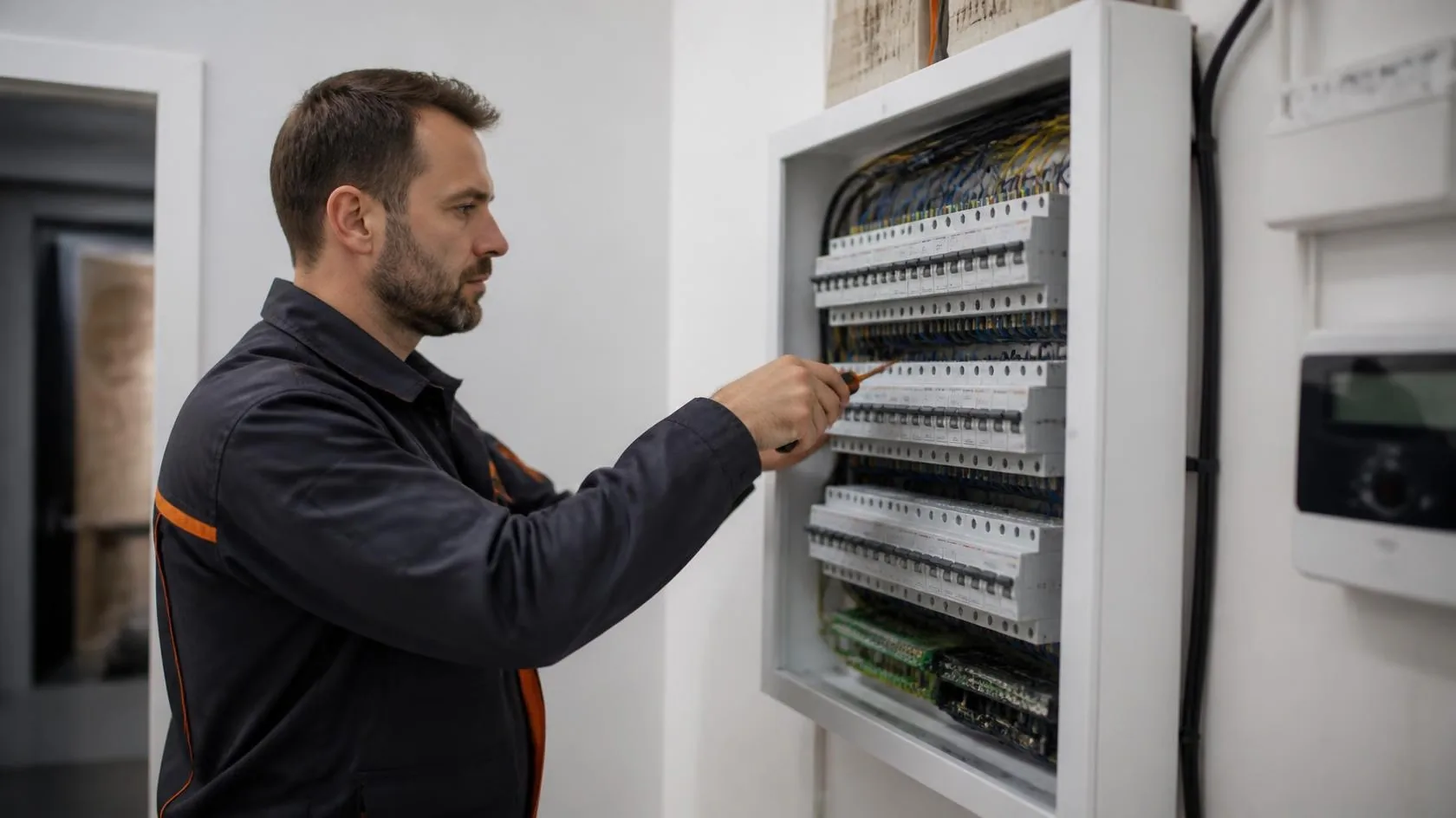
Electrician Lead Generation: Turn Panicked Visitors Into Captured Leads
By Justin Walker, Founder, Crafted Workspace AI
Half the house is dark at 1 AM and the breaker box is humming. That homeowner is on your website right now, afraid to touch the panel. Here's how to make sure you hear from them.
The 1 AM outage problem
A summer storm rolls through at midnight. At 1 AM, half the house goes dark — and the breaker panel is making a faint buzzing sound the homeowner has never heard before. She's standing in the hallway with a flashlight, Googling electrician near me with one thumb, genuinely unsure whether it's safe to touch anything.
Your website loads. It lists your services, your service area, your phone number — which rings out to a generic voicemail. There's a contact form, but she's not filling out a form while wondering if her house might catch fire. She taps back to the search results and calls the next electrician.
Electrical leads are uniquely fear-driven. The visitor isn't just inconvenienced — they're worried. Whoever answers first doesn't just win the job; they become the trusted electrician for every future panel upgrade, EV charger, and rewiring project that household ever needs.
What your website should capture from every visitor
Electrical inquiries range from “my outlet stopped working” to “I smell burning.” Your website needs to sort them fast:
- Full outage vs. partial. Whole house dark, or just some rooms? Partial outages point to panel or circuit issues; full outages might be the utility's problem — worth asking about before you roll a truck.
- Sparks, smoke, or burning smells. The three words that change everything. These get an immediate safety-first response, not a sales conversation.
- What's affected. Which rooms, which appliances, any recent work done on the electrical system — this scopes the visit.
- Panel and home age. A 40-year-old panel in a 1960s house tells a very different story than a tripped breaker in a new build.
- Contact details and ZIP. Name, cell number, service-area confirmation.
- What they want next. Emergency visit, next-available appointment, or a quote for planned work like a panel upgrade or EV charger install.
Safety first, sales second. The website's job is to recognize danger, capture the lead, and get the right eyes on it immediately.
A day in the life: 12:15 AM during a storm
12:15 AM. Greg's house just lost power in half its rooms during a thunderstorm. No sparks, no smell — just dark. He lands on your website and the chat opens: “Electrical trouble? Let's figure out what's going on.”
The assistant asks the questions a good office manager would ask: which rooms are out, any sparks or burning smell (no), has he checked whether the neighbors lost power too (they didn't — so it's his house, not the grid). It captures his name, cell, and ZIP, notes the panel is original to a 1980s home, and flags it as urgent for the on-call electrician. “Our on-call electrician is being notified now and will call you back shortly,” it tells him. Greg stops worrying and waits for the call instead of dialing three more shops.
Contrast that with 10:50 PM the same night: a visitor types “smell something burning near an outlet.” The assistant doesn't chat about scheduling — it tells her to call 911 first if there's any sign of fire, to stay safe, and then captures her details so you can follow up. It never replaces emergency services; it makes sure the dangerous situation gets the right response and you still get the lead.
And the routine ones? A noon inquiry about an EV charger quote gets answered from your pricing, contact captured, request logged. Urgent, dangerous, and routine — all sorted correctly, all captured.
The routine side is where the quiet money is — we broke it down step by step in how electrician websites turn panel-upgrade and EV-charger questions into estimate requests.
Instant lead response for electricians: what it means on a website
Electricians searching for instant lead response are usually picturing the same moment: a homeowner loses power at 1 a.m., finds the website on their phone, and decides in seconds whether anyone is there. If the site is silent, they move to the next company. Instant lead response means the website answers in seconds, around the clock — the assistant greets the visitor, answers routine questions from information you approved (services, service area, how estimates work), and starts the intake an office would start: name, mobile number, address, and what is happening.
Speed is only half of it; sorting is the other half. By your own urgency rules, a sparking outlet or burning smell is flagged as an emergency and alerted to your on-call contact instantly — and if there is any sign of fire or smoke, the visitor is told to call 911 first; the assistant never replaces emergency services and never diagnoses an electrical problem from a chat. A panel-upgrade or EV charger inquiry is captured as a clean morning lead instead. Anything outside your approved information is captured with the visitor’s contact details instead of guessed. This is website response, not a phone answering service — see it working on the AI answering service for electricians live demo.
See it working, then put it on your site
Try it yourself: our AI answering service for electricians — live demo assistant is built for the fictional BrightLine Electric. Try an outage scenario, try a burning-smell scenario, and watch how differently it handles each one. Not sure what yours should handle first? Take the free Website Assistant Test — five questions, an instant scored result, and no email required.
When you're ready, we build yours around your services, prices, service area, and safety triage rules, install it on your website, and manage it ongoing. $297/month for one website, free setup, month-to-month, 14-day money-back guarantee. It takes booking requests; you confirm the appointments.
Questions, answered
Can it tell a real emergency from a flickering light?
Yes — it's trained on your triage rules. Sparks, smoke, or burning smells trigger an immediate safety-first response and an urgent flag to your on-call electrician. A flickering hallway light becomes a next-day service request. You set the rules; it never freelances on safety.
What does it do if there's a fire risk?
It tells the visitor to call 911 first and stay safe — it never tries to handle a dangerous situation over chat and never replaces emergency services. Then it captures their contact details so you can follow up once they're safe.
Will it answer technical electrical questions?
It answers from the business information you approve — your services, your pricing, your process. It doesn't diagnose electrical systems or give technical instructions beyond your approved guidance. Anything complex becomes a qualified lead routed to you.
How much does it cost?
Flat $297/month for one website: build, training, installation, and ongoing management included. No per-chat or per-lead fees, month-to-month, with a 14-day money-back guarantee on new subscriptions.
What does instant lead response mean for an electrician's website?
It means a visitor who lands on the site with no power, a sparking outlet, or a panel question gets an answer in seconds, at any hour, instead of waiting for a morning callback. The assistant answers from information the electrical company approved, sorts the inquiry by the owner's urgency rules, captures the visitor's contact details and problem, and alerts the on-call contact instantly for emergencies. It is website lead response only: it does not answer the phone line, and if there is any sign of fire or smoke it tells the visitor to call 911 first.
See what it would do on your website
Flat $297/mo · Free setup · We build, train, install & manage it · 14-day money-back guarantee
See plans Try the live electrician demo Request a personal demo